Compliance Hub

Choosing the Right AML Software for Your Business

Site Logo
Tookitaki
4 min
read

Anti-Money Laundering (AML) regulations are becoming increasingly stringent, and businesses are under more pressure than ever to comply. With the rise of financial crimes and the need for transparency, AML software has become a crucial tool for businesses to detect and prevent money laundering activities.

But with so many AML software options available, how do you choose the right one for your business? In this article, we’ll explore the key factors to consider when selecting AML software and provide tips for finding the best fit for your business.

Why Is AML Software Important?

Money laundering is a serious issue that can have severe consequences for businesses. Not only can it result in financial losses, but it can also damage a company’s reputation and lead to legal repercussions.

AML software helps businesses comply with regulations and identify suspicious activities that may indicate money laundering. It automates the process of monitoring transactions and customer data, making it easier for businesses to identify and report suspicious activities.

AML Compliance

AML software is essential for businesses to comply with regulations set by governing bodies such as the Financial Action Task Force (FATF) and the Financial Crimes Enforcement Network (FinCEN). These regulations require businesses to have robust AML programs in place to prevent money laundering and terrorist financing.

By implementing AML software, businesses can ensure they are meeting compliance requirements and avoid hefty fines and penalties.

Detecting Suspicious Activities

AML software uses advanced algorithms and machine learning to analyze customer data and transaction patterns. This allows businesses to identify suspicious activities that may indicate money laundering, such as large cash deposits, frequent transactions between unrelated parties, and transactions involving high-risk countries.

By detecting these activities, businesses can take action to prevent money laundering and protect their reputation and financial stability.

Streamlining AML Processes

Manual AML processes can be time-consuming and prone to human error. AML software automates these processes, making them more efficient and accurate. This saves businesses time and resources, allowing them to focus on other critical tasks.

{{cta-first}}

Key Factors to Consider When Choosing AML Software

When selecting AML software for your business, there are several key factors to consider. These include:

Compliance Requirements

Different industries and businesses have varying compliance requirements, and it’s essential to choose AML software that meets your specific needs. For example, if you’re an accountant, you may need AML software that is tailored to your industry and can integrate with your existing accounting software.

Before choosing AML software, make sure to research the compliance requirements for your industry and ensure the software you choose meets those requirements.

Features and Functionality

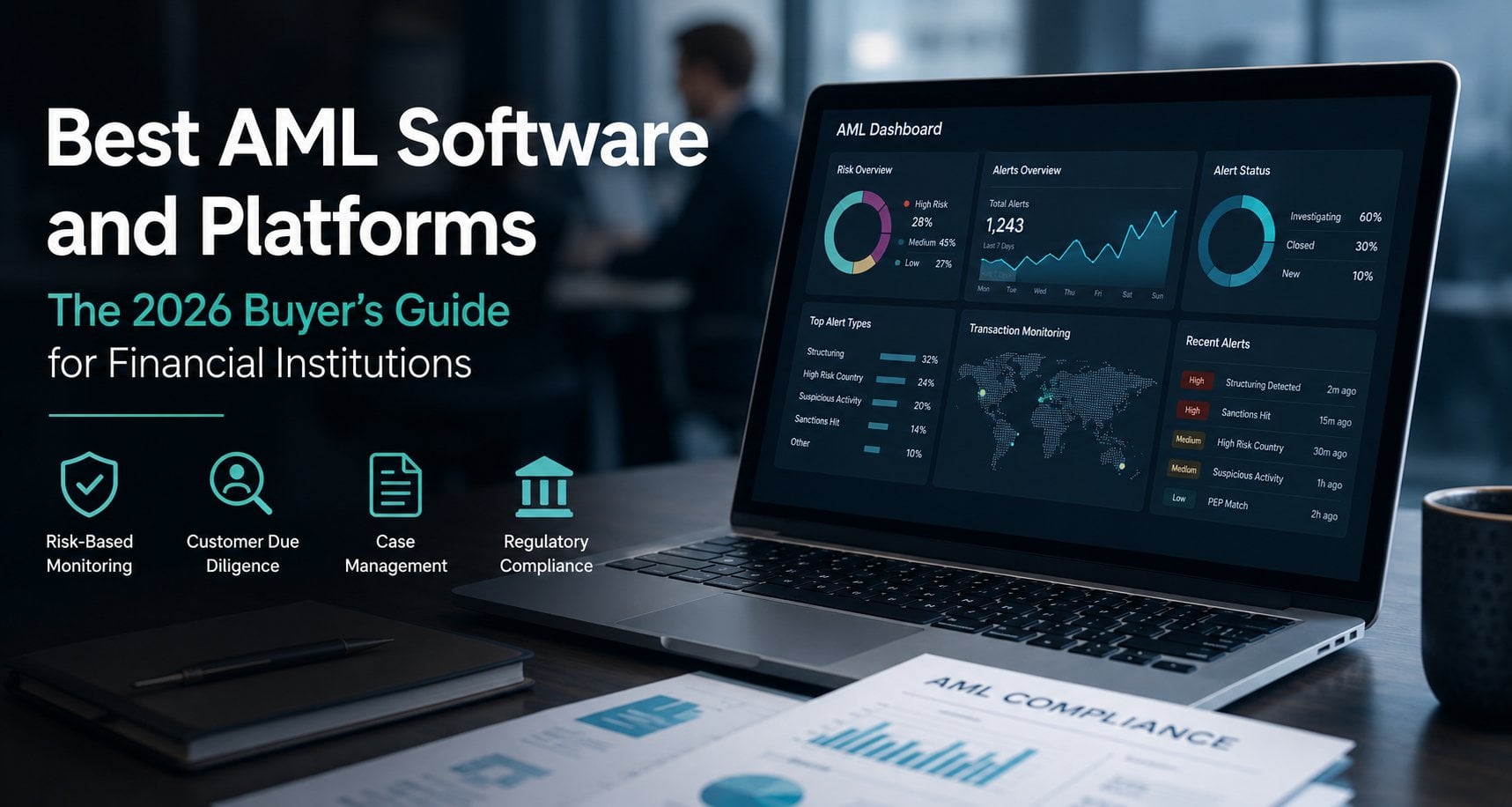
AML software can vary in features and functionality, so it’s crucial to consider what your business needs. Some essential features to look for include transaction monitoring, customer due diligence, and case management.

Additionally, consider if the software offers automation and integration capabilities, as well as reporting and analytics features. These can help streamline processes and provide valuable insights into your AML program’s effectiveness.

User-Friendliness

The AML software you choose should be user-friendly and easy to navigate. This is especially important if you have multiple employees using the software, as it should be accessible to all team members.

Consider doing a demo or trial of the software before committing to ensure it is user-friendly and meets your business’s needs.

Cost

The cost of AML software can vary significantly, so it’s essential to consider your budget when choosing a solution. Some software may have a one-time fee, while others may require a monthly or annual subscription.

Be sure to research the pricing options for different AML software and choose one that fits within your budget while still meeting your business’s needs.

Customer Support

In case you encounter any issues or have questions about the software, it’s crucial to have reliable customer support. Look for AML software providers that offer 24/7 support and have a good reputation for responding to customer inquiries promptly.

Tips for Finding the Right AML Software for Your Business

Now that you know the key factors to consider when choosing AML software, here are some tips to help you find the right fit for your business:

Research Different Providers

There are many AML software providers on the market, and it’s essential to research and compare different options. Look for providers that have experience in your industry and have a good reputation for providing reliable and effective AML solutions.

Read Reviews and Ask for Recommendations

Reading reviews from other businesses can provide valuable insights into the effectiveness and user-friendliness of different AML software. Additionally, ask for recommendations from other businesses in your industry to see what software they use and if they have had success with it.

Consider Scalability

As your business grows, your AML needs may change. It’s essential to choose AML software that can scale with your business and accommodate any future needs. This will save you from having to switch to a new software in the future and go through the selection process again.

Take Advantage of Demos and Trials

Many AML software providers offer demos or trials of their software, allowing you to test it out before committing. Take advantage of these opportunities to ensure the software meets your business’s needs and is user-friendly.

{{cta-ebook}}

Wrapping Up

Choosing the right AML software for your business is crucial for complying with regulations and preventing financial crimes. Tookitaki's FinCense stands out as the best option for banks and fintech companies, offering collective intelligence, comprehensive risk coverage, scalability, best-in-class technology, sharper alerts, and unified workflow management.

Financial institutions looking to enhance their AML program should definitely consider talking to Tookitaki's experts to learn more about FinCense and how it can benefit their business. By choosing the right AML software, businesses can streamline processes, detect suspicious activities, and ensure compliance with regulations, ultimately safeguarding their reputation and financial stability.

By submitting the form, you agree that your personal data will be processed to provide the requested content (and for the purposes you agreed to above) in accordance with the Privacy Notice

success icon

We’ve received your details and our team will be in touch shortly.

In the meantime, explore how Tookitaki is transforming financial crime prevention.
Learn More About Us
Oops! Something went wrong while submitting the form.

Ready to Streamline Your Anti-Financial Crime Compliance?

Our Thought Leadership Guides

Blogs
22 Dec 2025
6 min
read

Counting the Cost: How AML Compliance is Reshaping Budgets in Singapore

Singapore's financial institutions are spending more than ever to stay compliant — but are they spending smart?

As financial crime grows in sophistication, the regulatory net is tightening. For banks and fintechs in Singapore, Anti-Money Laundering (AML) compliance is no longer a checkbox—it’s a critical function that commands significant investment.

This blog takes a closer look at the real cost of AML compliance in Singapore, why it's rising, and what banks can do to reduce the burden without compromising risk controls.

Talk to an Expert

What is AML Compliance, Really?

AML compliance refers to a financial institution’s obligation to detect, prevent, and report suspicious transactions that may be linked to money laundering or terrorism financing. This includes:

  • Customer Due Diligence (CDD)
  • Transaction Monitoring
  • Screening for Sanctions, PEPs, and Adverse Media
  • Suspicious Transaction Reporting (STR)
  • Regulatory Recordkeeping

In Singapore, these requirements are enforced by the Monetary Authority of Singapore (MAS) through Notices 626 (for banks) and 824 (for payment institutions), among others.

Why is the Cost of AML Compliance Increasing in Singapore?

AML compliance is expensive—and getting more so. The cost drivers include:

1. Expanding Regulatory Requirements

New MAS guidelines around technology risk, ESG-related AML risks, and digital banking supervision add more obligations to already stretched compliance teams.

2. Explosion in Transaction Volumes

With real-time payments (PayNow, FAST) and cross-border fintech growth, transaction monitoring systems must now scale to process millions of transactions daily.

3. Complex Typologies and Threats

Fraudsters are using social engineering, deepfakes, mule networks, and shell companies, requiring more advanced and layered detection mechanisms.

4. High False Positives

Legacy systems often flag benign transactions as suspicious, leading to investigation overload and inefficient resource allocation.

5. Talent Shortage

Hiring and retaining skilled compliance analysts and investigators in Singapore is costly due to demand outpacing supply.

6. Fines and Enforcement Risks

The reputational and financial risk of non-compliance remains high, pushing institutions to overcompensate with manual checks and expensive audits.

Breaking Down the Cost Elements

The total cost of AML compliance includes both direct and indirect expenses:

Direct Costs:

  • Software licensing for AML platforms
  • Customer onboarding (KYC/CDD) systems
  • Transaction monitoring engines
  • Screening databases (sanctions, PEPs, etc.)
  • Regulatory reporting infrastructure
  • Hiring and training compliance staff

Indirect Costs:

  • Operational delays due to manual reviews
  • Customer friction due to false positives
  • Reputational risks from late filings or missed STRs
  • Opportunity cost of delayed product rollouts due to compliance constraints

Hidden Costs: The Compliance Drag on Innovation

One of the less discussed impacts of rising AML costs is the drag on digital transformation. Fintechs and neobanks, which are built for agility, often find themselves slowed down by:

  • Lengthy CDD processes
  • Rigid compliance architectures
  • Manual STR documentation

This can undermine user experience, onboarding speed, and cross-border expansion.

Singapore’s Compliance Spending Compared Globally

While Singapore’s market is smaller than the US or EU, its AML compliance burden is proportionally high due to:

  • Its position as an international financial hub
  • High exposure to cross-border flows
  • Rigorous MAS enforcement standards

According to industry estimates, large banks in Singapore spend between 4 to 7 percent of their operational budgets on compliance, with AML being the single biggest contributor.

ChatGPT Image Dec 22, 2025, 10_05_05 AM

Technology as a Cost-Optimiser, Not Just a Cost Centre

Rather than treating AML systems as cost centres, leading institutions in Singapore are now using intelligent technology to reduce costs while enhancing effectiveness. These include:

1. AI-Powered Transaction Monitoring

  • Reduces false positives by understanding behavioural patterns
  • Automates threshold tuning based on past data

2. Federated Learning Models

  • Learn from fraud and laundering typologies across banks without sharing raw data

3. AI Copilots for Investigations

  • Tools like Tookitaki’s FinMate surface relevant case context and narrate findings automatically
  • Improve investigator productivity by up to 3x

4. Scenario-Based Typologies

  • Enable proactive detection of specific threats like mule networks or BEC fraud

Tookitaki’s Approach to Reducing AML Compliance Costs

Tookitaki’s FinCense platform offers a modular, AI-driven compliance suite purpose-built for financial institutions in Singapore and beyond. Here’s how it helps reduce cost while increasing coverage:

  • Smart Disposition Engine reduces investigation times through natural language summaries
  • Federated AI shares typologies without violating data privacy laws
  • Unified platform for AML and fraud lowers integration and training costs
  • Plug-and-play scenarios allow quick rollout for new threat types

Real-world impact:

  • Up to 72% reduction in false positives
  • 3.5x improvement in analyst productivity
  • Significant savings in training and STR documentation time

How Regulators View Cost vs. Compliance

While MAS expects full compliance, it also encourages innovation and risk-based approaches. Their FinTech Regulatory Sandbox and support for AI-powered RegTech solutions signal a willingness to:

  • Balance oversight with efficiency
  • Encourage public-private collaboration
  • Support digital-first compliance architectures

This is an opportunity for Singapore’s institutions to move beyond traditional, high-cost models.

Five Strategies to Optimise AML Spend

  1. Invest in Explainable AI: Improve detection without creating audit blind spots
  2. Use Federated Typologies: Tap into industry-wide risk intelligence
  3. Unify AML and Fraud: Eliminate duplication in alerts and investigations
  4. Adopt Modular Compliance Tools: Scale capabilities as your institution grows
  5. Train with AI Assistants: Reduce dependency on large teams for investigations

Final Thoughts: From Compliance Cost to Competitive Edge

AML compliance will always involve cost, but the institutions that treat it as a strategic capability rather than a regulatory burden are the ones that will thrive.

With smarter tools, shared intelligence, and a modular approach, Singapore’s financial ecosystem can build a new model—one where compliance is faster, cheaper, and more intelligent.

Counting the Cost: How AML Compliance is Reshaping Budgets in Singapore
Blogs
19 Dec 2025
6 min
read

Bank AML Compliance: What It Really Looks Like Inside a Bank

AML compliance is not a policy document. It is the sum of thousands of decisions made every day inside a bank.

Introduction

Ask most people what bank AML compliance looks like, and they will describe policies, procedures, regulatory obligations, and reporting timelines. They will talk about AUSTRAC, risk assessments, transaction monitoring, and suspicious matter reports.

All of that is true.
And yet, it misses the point.

Inside a bank, AML compliance is not experienced as a framework. It is experienced as work. It lives in daily trade-offs, judgement calls, time pressure, alert queues, imperfect data, and the constant need to balance risk, customer impact, and regulatory expectations.

This blog looks beyond the formal definition of bank AML compliance and into how it actually functions inside Australian banks. Not how it is meant to work on paper, but how it works in practice, and what separates strong AML compliance programs from those that quietly struggle.

Talk to an Expert

AML Compliance Is a Living System, Not a Static Requirement

In theory, AML compliance is straightforward.
Banks assess risk, monitor activity, investigate suspicious behaviour, and report where required.

In reality, compliance operates as a living system made up of people, processes, data, and technology. Each component affects the others.

When one part weakens, the entire system feels the strain.

Strong AML compliance is not about having the longest policy manual. It is about whether the system holds together under real operational pressure.

The Daily Reality of AML Compliance Teams

To understand bank AML compliance, it helps to look at what teams deal with every day.

Alert volume never stands still

Transaction monitoring systems generate alerts continuously. Some are meaningful. Many are not. Analysts must quickly decide which deserve deeper investigation and which can be cleared.

The quality of AML compliance often depends less on how many alerts are generated and more on how well teams can prioritise and resolve them.

Data is rarely perfect

Customer profiles change. Transaction descriptions are inconsistent. External data arrives late or incomplete. Behaviour does not always fit neat patterns.

Compliance teams work with imperfect information and are expected to reach defensible conclusions anyway.

Time pressure is constant

Reporting timelines are fixed. Regulatory expectations do not flex when volumes spike. Teams must deliver consistent quality even during scam waves, system upgrades, or staff shortages.

Judgement matters

Despite automation, AML compliance still relies heavily on human judgement. Analysts decide whether behaviour is suspicious, whether context explains an anomaly, and whether escalation is necessary.

Strong compliance programs support judgement. Weak ones overwhelm it.

Where AML Compliance Most Often Breaks Down

In Australian banks, AML compliance failures rarely happen because teams do not care or policies do not exist. They happen because the system does not support the work.

1. Weak risk foundations

If customer risk assessment at onboarding is simplistic or outdated, monitoring becomes noisy and unfocused. Low risk customers are over monitored, while genuine risk hides in plain sight.

2. Fragmented workflows

When detection, investigation, and reporting tools are disconnected, analysts spend more time navigating systems than analysing risk. Context is lost and decisions become inconsistent.

3. Excessive false positives

Rules designed to be safe often trigger too broadly. Analysts clear large volumes of benign alerts, which increases fatigue and reduces sensitivity to genuine risk.

4. Inconsistent investigation quality

Without clear structure, two analysts may investigate the same pattern differently. This inconsistency creates audit exposure and weakens confidence in the compliance program.

5. Reactive compliance posture

Some programs operate in constant response mode, reacting to regulatory feedback or incidents rather than proactively strengthening controls.

What Strong Bank AML Compliance Actually Looks Like

When AML compliance works well, it feels different inside the organisation.

Risk is clearly understood

Customer risk profiles are meaningful and influence monitoring behaviour. Analysts know why a customer is considered high, medium, or low risk.

Alerts are prioritised intelligently

Not all alerts are treated equally. Systems surface what matters most, allowing teams to focus their attention where risk is highest.

Investigations are structured

Cases follow consistent workflows. Evidence is organised. Rationales are clear. Decisions can be explained months or years later.

Technology supports judgement

Systems reduce noise, surface context, and assist analysts rather than overwhelming them with raw data.

Compliance and business teams communicate

AML compliance does not operate in isolation. Product teams, operations, and customer service understand why controls exist and how to support them.

Regulatory interactions are confident

When regulators ask questions, teams can explain decisions clearly, trace actions, and demonstrate how controls align with risk.

AUSTRAC Expectations and the Reality on the Ground

AUSTRAC expects banks to take a risk based approach to AML compliance. This means controls should be proportionate, explainable, and aligned with actual risk exposure.

In practice, this requires banks to show:

  • How customer risk is assessed
  • How that risk influences monitoring
  • How alerts are investigated
  • How decisions are documented
  • How suspicious matters are escalated and reported

The strongest programs embed these expectations into daily operations, not just into policy documents.

The Human Side of AML Compliance

AML compliance is often discussed in technical terms, but it is deeply human work.

Analysts:

  • Review sensitive information
  • Make decisions that affect customers
  • Work under regulatory scrutiny
  • Manage high workloads
  • Balance caution with practicality

Programs that ignore this reality tend to struggle. Programs that design processes and technology around how people actually work tend to perform better.

Supporting AML teams means:

  • Reducing unnecessary noise
  • Providing clear context
  • Offering structured guidance
  • Investing in training and consistency
  • Using technology to amplify judgement, not replace it
ChatGPT Image Dec 17, 2025, 01_15_13 PM

Technology’s Role in Modern Bank AML Compliance

Technology does not define compliance, but it shapes what is possible.

Modern AML platforms help banks by:

  • Improving risk segmentation
  • Reducing false positives
  • Providing behavioural insights
  • Supporting consistent investigations
  • Maintaining strong audit trails
  • Enabling timely regulatory reporting

The key is alignment. Technology must reflect how compliance operates, not force teams into unnatural workflows.

How Banks Mature Their AML Compliance Without Burning Out Teams

Banks that successfully strengthen AML compliance tend to focus on gradual, sustainable improvements.

1. Start with risk clarity

Refine customer risk assessment and onboarding logic. Better foundations improve everything downstream.

2. Focus on alert quality, not quantity

Reducing false positives has a bigger impact than adding new rules.

3. Standardise investigations

Clear workflows and narratives improve consistency and defensibility.

4. Invest in explainability

Systems that clearly explain why alerts were triggered reduce friction with regulators and auditors.

5. Treat compliance as a capability

Strong AML compliance is built over time through learning, refinement, and collaboration.

Where Tookitaki Fits Into the AML Compliance Picture

Tookitaki supports bank AML compliance by focusing on the parts of the system that most affect daily operations.

Through the FinCense platform, banks can:

  • Apply behaviour driven risk detection
  • Reduce noise and prioritise meaningful alerts
  • Support consistent, explainable investigations
  • Maintain strong audit trails
  • Align controls with evolving typologies

This approach helps Australian institutions, including community owned banks such as Regional Australia Bank, strengthen AML compliance without overloading teams or relying solely on rigid rules.

The Direction Bank AML Compliance Is Heading

Bank AML compliance in Australia is moving toward:

  • More intelligence and less volume
  • Stronger integration across the AML lifecycle
  • Better support for human judgement
  • Clearer accountability and governance
  • Continuous adaptation to emerging risks

The most effective programs recognise that compliance is not something a bank finishes building. It is something a bank continually improves.

Conclusion

Bank AML compliance is often described in frameworks and obligations, but it is lived through daily decisions made by people working with imperfect information under real pressure.

Strong AML compliance is not about perfection. It is about resilience, clarity, and consistency. It is about building systems that support judgement, reduce noise, and stand up to scrutiny.

Australian banks that understand this reality and design their AML programs accordingly are better positioned to manage risk, protect customers, and maintain regulatory confidence.

Because in the end, AML compliance is not just about meeting requirements.
It is about how well a bank operates when it matters most.

Bank AML Compliance: What It Really Looks Like Inside a Bank
Blogs
18 Dec 2025
6 min
read

Singapore’s Smart Defence Against Financial Crime: The Rise of Anti-Fraud Solutions

Think fraud’s a distant threat? In Singapore’s digital-first economy, it’s already at your doorstep.

From phishing scams to real-time payment fraud and mule accounts, the financial sector in Singapore is facing increasingly sophisticated fraud risks. As a global financial hub and one of Asia’s most digitised economies, Singapore’s banks and fintechs must stay ahead of threat actors with faster, smarter, and more adaptive anti-fraud solutions.

This blog explores how modern anti-fraud solutions are transforming detection and response strategies—making Singapore’s compliance systems more agile and effective.

Talk to an Expert

What is an Anti-Fraud Solution?

An anti-fraud solution is a set of tools, systems, and techniques designed to detect, prevent, and respond to fraudulent activities across financial transactions and operations. These solutions can be deployed across:

  • Digital banking platforms
  • E-wallets and payment gateways
  • Core banking systems
  • Credit card processing and loan disbursement workflows

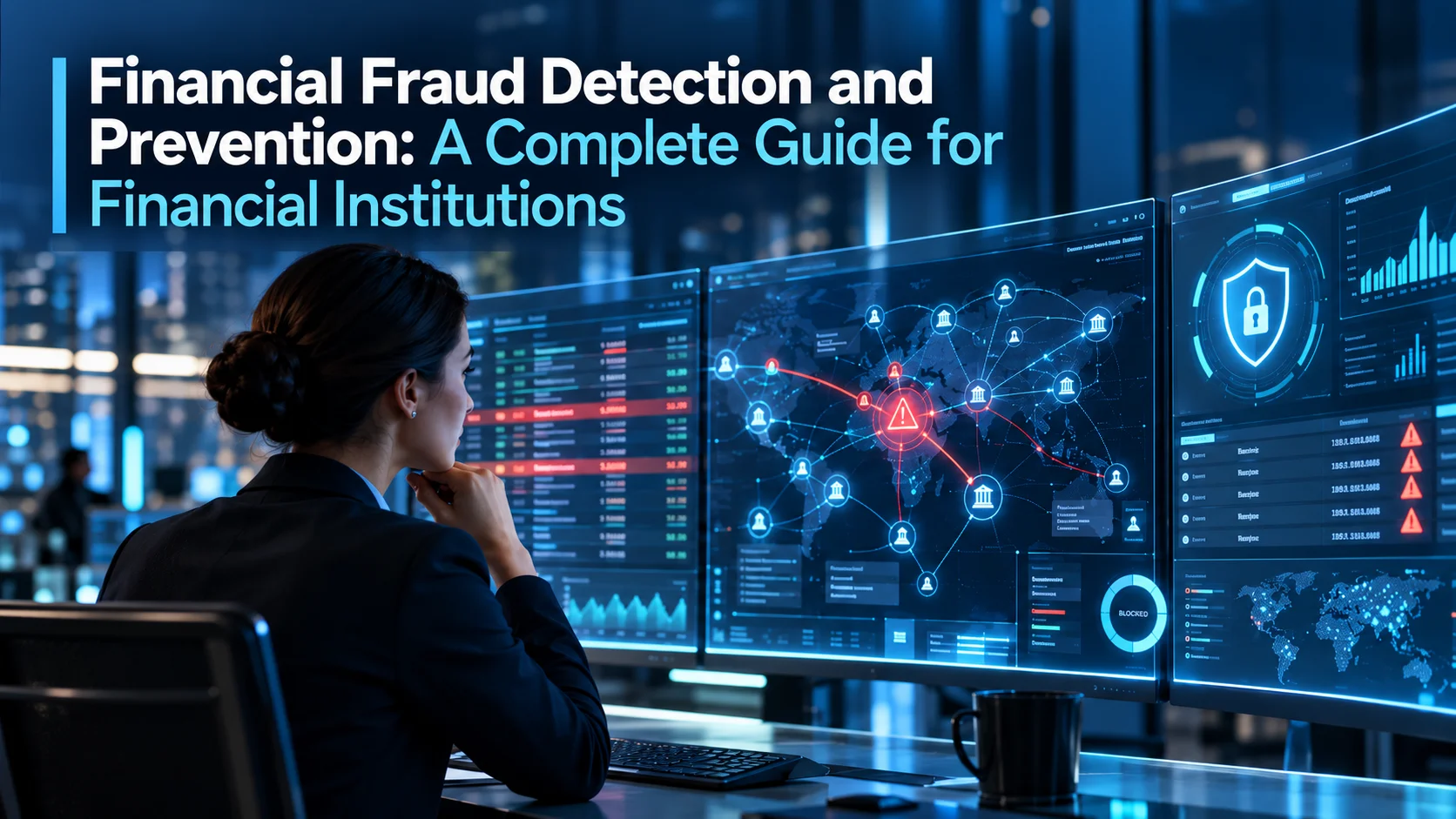
Modern anti-fraud solutions combine real-time monitoring, AI/ML algorithms, behavioural analytics, and automated investigation tools to proactively identify fraud before damage occurs.

Why Singapore Needs Smarter Fraud Prevention

Singapore’s fraud environment is evolving quickly:

  • Real-time payments (PayNow, FAST) have accelerated attack windows
  • Cross-border mule networks are getting more organised
  • Fake investment scams and impersonation fraud are rampant
  • Businesses are falling victim to supplier payment fraud

The Monetary Authority of Singapore (MAS) and the police’s Anti-Scam Command have highlighted that collaboration, data sharing, and better tech adoption are critical to protect consumers and businesses.

Common Types of Financial Fraud in Singapore

Understanding the landscape is the first step in creating a solid defence. Some of the most prevalent types of fraud in Singapore include:

1. Social Engineering & Impersonation Scams

Fraudsters pose as bank officials, family members, or law enforcement to manipulate victims into transferring funds.

2. Account Takeover (ATO)

Cybercriminals gain unauthorised access to user accounts, especially e-wallets or mobile banking apps, and initiate transactions.

3. Business Email Compromise (BEC)

Emails from fake suppliers or internal staff trick finance teams into approving fraudulent transfers.

4. Fake Investment Platforms

Syndicates set up websites offering high returns and launder proceeds through a network of bank accounts.

5. Payment Fraud & Stolen Credentials

Fraudulent card-not-present transactions and misuse of stored payment details.

Anatomy of a Modern Anti-Fraud Solution

An effective anti-fraud solution isn’t just about flagging suspicious activity. It should work holistically across:

Real-Time Transaction Monitoring

  • Screens transactions in milliseconds
  • Flags anomalies using behavioural analytics
  • Supports instant payment rails like PayNow/FAST

Identity and Device Risk Profiling

  • Analyses login locations, device fingerprinting, and user behaviour
  • Detects deviations from known patterns

Network Analysis and Mule Detection

  • Flags accounts connected to known mule rings or suspicious transaction clusters
  • Uses graph analysis to detect unusual fund flow patterns

Automated Case Management

  • Creates alerts with enriched context
  • Prioritises high-risk cases using AI
  • Enables fast collaboration between investigation teams

AI Narration & Investigator Assistants

  • Summarises complex case histories automatically
  • Surfaces relevant risk indicators
  • Helps junior analysts work like seasoned investigators

Key Features to Look For

When evaluating anti-fraud software, look for solutions that offer:

  • Real-time analytics with low-latency response times
  • Behavioural and contextual scoring to reduce false positives
  • Federated learning to learn from fraud patterns across institutions
  • Explainable AI to ensure compliance with audit and regulatory expectations
  • Modular design that integrates with AML, screening, and case management systems

How Tookitaki Strengthens Fraud Defences

Tookitaki’s FinCense platform delivers an enterprise-grade fraud management system built to meet the demands of Singapore’s digital economy.

Key highlights:

  • Unified platform for AML and fraud—no more siloed alerts
  • Federated learning across banks to detect new fraud typologies
  • Smart Disposition engine that automates investigation summaries
  • Real-time transaction surveillance with customisable rules and AI models

FinCense is already helping banks in Singapore reduce false positives by up to 72% and improve investigator productivity by over 3x.

ChatGPT Image Dec 17, 2025, 12_50_17 PM

Local Trends Shaping Anti-Fraud Strategy

Singapore’s financial institutions are rapidly adopting fraud-first strategies, driven by:

  • FATF recommendations to improve fraud risk management
  • Growing consumer demand for real-time, secure payments
  • Regulatory push for stronger surveillance of mule accounts
  • Cloud migration allowing greater scalability and detection power

Challenges in Implementing Anti-Fraud Tools

Despite the urgency, some challenges remain:

  • High false positives from legacy rules-based systems
  • Siloed systems that separate AML from fraud monitoring
  • Lack of collaboration between institutions to share intelligence
  • Shortage of skilled fraud analysts to manage growing alert volumes

Future of Anti-Fraud in Singapore

The future will be defined by:

  • AI co-pilots that guide investigations with context-aware insights
  • Self-learning systems that adapt to new scam typologies
  • Cross-border collaboration between ASEAN countries
  • RegTech ecosystems like the AFC Ecosystem to crowdsource fraud intelligence

Conclusion: Time to Think Proactively

In an environment where scams evolve faster than regulations, banks and fintechs can’t afford to be reactive. Anti-fraud solutions must move from passive alert generators to proactive fraud stoppers—powered by AI, designed for real-time action, and connected to collective intelligence networks.

Don’t wait for the fraud to hit. Build your defence today.

Singapore’s Smart Defence Against Financial Crime: The Rise of Anti-Fraud Solutions