Blog

Tookitaki Helped Indonesian Market with Country's FATF Membership

Site Logo
Tookitaki
27 September 2022
read
2 min

Jakarta, 20 September 2022 - Southeast Asian regulatory technology (regtech) firm Tookitaki expands to Indonesia to support the country in meeting its Anti-Money Laundering (AML) and compliance needs. Headquartered in Singapore, Tookitaki provides end-to-end financial crime solutions to some of the world’s leading financial institutions. 

Earlier this year, the Sectoral Risk Assessment (SRA) Task Force was set up and tasked to prevent the misuse of corporations for economic crimes as part of the country’s drive to become a member of the Financial Action Task Force (FATF). The Center for Financial Transaction Reports and Analysis (PPATK) has gone through a long process, particularly since 18 years ago, for Indonesia to become a member of the FATF and gain the trust of member countries.

In the meantime, according to the Financial Transaction Reports and Analysis Centre (PPATK) in Indonesia, 73,000 reports on suspicious financial transactions were filed in 2021, marking an increase from 68,057 in 2020.

Becoming a FATF member nation would allow Indonesia to have greater acceptance in the international business world and gain cooperation in combating money laundering mechanisms and preventing terrorism financing. Additionally, Indonesia will have a larger voice when determining global standards within the context of developing countries and growing trust from foreign investors.

“Indonesia is an untapped market with tremendous potential due to its significance as Southeast Asia’s largest economy. Becoming a  FATF member would drive the need for sophisticated technology that will help uncover complex patterns related to money laundering while saving time and improving the accuracy of AML/CFT detection. We are excited to join Indonesia’s Financial Services ecosystem and help in its drive to join the FATF,” said Abhishek Chatterjee, Founder and CEO of Tookitaki. 

Tookitaki’s vision is to fight financial crime through a shared community-driven framework rather than siloed current approaches. This is enabled via our AML ecosystem, the Hub and the Anti-Money Laundering Suite or AMLS, the Spoke deployed at the customer side. The AML ecosystem includes the AML network of people and the typology repository. The repository is a library of typologies and a no-code tool that aids in creating new typologies.

The Anti-Money Laundering Suite comprises four modules - Transaction Monitoring, Smart Screening, Customer Risk Scoring, and the Case Manager. AMLS can be deployed in multiple environments, including the public cloud, private cloud, and data centre.

“What makes AMLS a game-changer in this space is how we are improving risk coverage by democratising AML insights through a privacy-protected ecosystem,” said Abhishek. 

Tookitaki hopes this business expansion in Indonesia will not only be able to fight the money laundering issue by growing the community but also contribute in a more significant way to developing a safe financial ecosystem in various sectors, including banking, payment services, and others.

Earlier this year, Thunes, a global leader in powering payments, took a majority stake in Tookitaki to accelerate global business expansion. A major focus was deepening its presence in core APAC markets, including Indonesia. With the expansion in Indonesia, Tookitaki started employing Indonesian talents for its local operations to strengthen the country’s pool of regtech talents and contribute to economic growth while accelerating its FATF membership.

Talk to an Expert

Ready to Streamline Your Anti-Financial Crime Compliance?

Our Thought Leadership Guides

Blogs
12 Jan 2026
6 min
read

When Money Moves Like Business: Inside Taipei’s $970 Million Gambling Laundering Network

1. Introduction to the Case

At the start of 2026, prosecutors in Taipei uncovered a money laundering operation so extensive that its scale alone commanded attention. Nearly NT$30.6 billion, about US$970 million, allegedly moved through the financial system under the guise of ordinary business activity, tied to illegal online gambling operations.

There were no obvious warning signs at first glance. Transactions flowed through payment platforms that looked commercial. Accounts behaved like those of legitimate merchants. A well-known restaurant operated openly, serving customers while quietly anchoring a complex financial network behind the scenes.

What made this case remarkable was not just the volume of illicit funds, but how convincingly they blended into routine economic activity. The money did not rush through obscure channels or sit dormant in hidden accounts. It moved steadily, predictably, and efficiently, much like revenue generated by a real business.

By January 2026, authorities had indicted 35 individuals, bringing years of quiet laundering activity into the open. The case serves as a stark reminder for compliance leaders and financial institutions. The most dangerous laundering schemes today do not look criminal.

They look operational.

Talk to an Expert

2. Anatomy of the Laundering Operation

Unlike traditional laundering schemes that rely on abusing existing financial services, this alleged operation was built around direct ownership and control of payment infrastructure.

Step 1: Building the Payment Layer

Prosecutors allege that the network developed custom payment platforms specifically designed to handle gambling-related funds. These platforms acted as controlled gateways between illegal online gambling sites and regulated financial institutions.

By owning the payment layer, the network could shape how transactions appeared externally. Deposits resembled routine consumer payments rather than gambling stakes. Withdrawals appeared as standard platform disbursements rather than illicit winnings.

The laundering began not after the money entered the system, but at the moment it was framed.

Step 2: Ingesting Illegal Gambling Proceeds

Illegal online gambling platforms operating across multiple jurisdictions reportedly channelled funds into these payment systems. To banks and payment institutions, the activity did not immediately resemble gambling-related flows.

By separating the criminal source of funds from their visible transaction trail, the network reduced contextual clarity early in the lifecycle.

The risk signal weakened with every step removed from the original activity.

Step 3: Using a Restaurant as a Front Business

A legitimate restaurant allegedly played a central role in anchoring the operation. Physical businesses do more than provide cover. They provide credibility.

The restaurant justified the presence of merchant accounts, payment terminals, staff activity, supplier payments, and fluctuating revenue. It created a believable operational backdrop against which large transaction volumes could exist without immediate suspicion.

The business did not replace laundering mechanics.
It normalised them.

Step 4: Rapid Routing and Pass-Through Behaviour

Funds reportedly moved quickly through accounts linked to the payment platforms. Incoming deposits were followed by structured transfers and payouts to downstream accounts, including e-wallets and other financial channels.

High-volume pass-through behaviour limited residual balances and reduced the exposure of any single account. Money rarely paused long enough to draw attention.

Movement itself became the camouflage.

Step 5: Detection and Indictment

Over time, the scale and coordination of activity attracted scrutiny. Prosecutors allege that transaction patterns, account linkages, and platform behaviour revealed a level of organisation inconsistent with legitimate commerce.

In January 2026, authorities announced the indictment of 35 individuals, marking the end of an operation that had quietly integrated itself into everyday financial flows.

The network did not fail because one transaction was flagged.
It failed because the overall pattern stopped making sense.

3. Why This Worked: Control and Credibility

This alleged laundering operation succeeded because it exploited structural assumptions within the financial system rather than technical loopholes.

1. Control of the Transaction Narrative

When criminals control the payment platform, they control how transactions are described, timed, and routed. Labels, settlement patterns, and counterparty relationships all shape perception.

Compliance systems often assess risk against stated business models. In this case, the business model itself was engineered to appear plausible.

2. Trust in Commercial Interfaces

Payments that resemble everyday commerce attract less scrutiny than transactions explicitly linked to gambling or other high-risk activities. Familiar interfaces reduce friction, both for users and for monitoring systems.

Legitimacy was embedded into the design.

3. Fragmented Oversight

Different institutions saw different fragments of the activity. Banks observed account behaviour. Payment institutions saw transaction flows. The restaurant appeared as a normal merchant.

No single entity had a complete view of the end-to-end lifecycle of funds.

4. Scale Without Sudden Noise

Rather than relying on sudden spikes or extreme anomalies, the operation allegedly scaled steadily. This gradual growth allowed transaction patterns to blend into evolving baselines.

Risk accumulated quietly, over time.

4. The Financial Crime Lens Behind the Case

While the predicate offence was illegal gambling, the mechanics of this case reflect broader shifts in financial crime.

1. Infrastructure-Led Laundering

This was not simply the misuse of existing systems. It was the deliberate creation of infrastructure designed to launder money at scale.

Similar patterns are increasingly observed in scam facilitation networks, mule orchestration platforms, and illicit payment services operating across borders.

2. Payment Laundering Over Account Laundering

The focus moved away from individual accounts toward transaction ecosystems. Ownership of flow mattered more than ownership of balances.

Risk became behavioural rather than static.

3. Front Businesses as Integration Points

Legitimate enterprises increasingly serve as anchors where illicit and legitimate funds coexist. This integration blurs the boundary between clean and dirty money, making detection more complex.

ChatGPT Image Jan 12, 2026, 01_37_31 PM

5. Red Flags for Banks, Fintechs, and Regulators

This case highlights signals that extend beyond gambling environments.

A. Behavioural Red Flags

  • High-volume transaction flows with limited value retention
  • Consistent routing patterns across diverse counterparties
  • Predictable timing and structuring inconsistent with consumer behaviour

B. Operational Red Flags

  • Payment platforms scaling rapidly without proportional business visibility
  • Merchants behaving like processors rather than sellers
  • Front businesses supporting transaction volumes beyond physical capacity

C. Financial Red Flags

  • Large pass-through volumes with minimal margin retention
  • Rapid distribution of incoming funds across multiple channels
  • Cross-border flows misaligned with stated business geography

Individually, these indicators may appear benign. Together, they tell a story.

6. How Tookitaki Strengthens Defences

Cases like this reinforce why financial crime prevention must evolve beyond static rules and isolated monitoring.

1. Scenario-Driven Intelligence from the AFC Ecosystem

Expert-contributed scenarios capture complex laundering patterns that traditional typologies often miss, including platform-led and infrastructure-driven crime.

These insights help institutions recognise emerging risks earlier in the transaction lifecycle.

2. Behavioural Pattern Recognition

Tookitaki’s approach prioritises flow behaviour, coordination, and lifecycle anomalies rather than focusing solely on transaction values.

When money stops behaving like commerce, the signal emerges early.

3. Cross-Domain Risk Thinking

The same intelligence principles used to detect scam networks, mule rings, and high-velocity fraud apply equally to sophisticated laundering operations hidden behind legitimate interfaces.

Financial crime rarely fits neatly into one category. Detection should not either.

7. Conclusion

The Taipei case is a reminder that modern money laundering no longer relies on secrecy alone.

Sometimes, it relies on efficiency.

This alleged operation blended controlled payment infrastructure, credible business fronts, and transaction flows engineered to look routine. It did not disrupt the system. It embedded itself within it.

As 2026 unfolds, financial institutions face a clear challenge. The most serious laundering risks will not always announce themselves through obvious anomalies. They will appear as businesses that scale smoothly, transact confidently, and behave just convincingly enough to be trusted.

When money moves like business, the warning is already there.

When Money Moves Like Business: Inside Taipei’s $970 Million Gambling Laundering Network
Blogs
05 Jan 2026
6 min
read

When Luck Isn’t Luck: Inside the Crown Casino Deception That Fooled the House

1. Introduction to the Scam

In October 2025, a luxury casino overlooking Sydney Harbour became the unlikely stage for one of Australia’s most unusual fraud cases of the year 2025.

There were no phishing links, fake investment platforms, or anonymous scam calls. Instead, the deception unfolded in plain sight across gaming tables, surveillance cameras, and whispered instructions delivered through hidden earpieces.

What initially appeared to be an extraordinary winning streak soon revealed something far more calculated. Over a series of gambling sessions, a visiting couple allegedly accumulated more than A$1.17 million in winnings at Crown Sydney. By late November, the pattern had raised enough concern for casino staff to alert authorities.

The couple were subsequently arrested and charged by New South Wales Police for allegedly dishonestly obtaining a financial advantage by deception.

This was not a random act of cheating.
It was an alleged technology-assisted, coordinated deception, executed with precision, speed, and behavioural discipline.

The case challenges a common assumption in financial crime. Fraud does not always originate online. Sometimes, it operates openly, exploiting trust in physical presence and gaps in behavioural monitoring.

Talk to an Expert

2. Anatomy of the Scam

Unlike digital payment fraud, this alleged scheme relied on physical execution, real-time coordination, and human decision-making, making it harder to detect in its early stages.

Step 1: Strategic Entry and Short-Term Targeting

The couple arrived in Sydney in October 2025 and began visiting the casino shortly after. Short-stay visitors with no local transaction history often present limited behavioural baselines, particularly in hospitality and gaming environments.

This lack of historical context created an ideal entry point.

Step 2: Use of Covert Recording Devices

Casino staff later identified suspicious equipment allegedly used during gameplay. Police reportedly seized:

  • A small concealed camera attached to clothing
  • A modified mobile phone with recording attachments
  • Custom-built mirrors and magnetised tools

These devices allegedly allowed the capture of live game information not normally accessible to players.

Step 3: Real-Time Remote Coordination

The couple allegedly wore concealed earpieces during play, suggesting live communication with external accomplices. This setup would have enabled:

  • Real-time interpretation of captured visuals
  • Calculation of betting advantages
  • Immediate signalling of wagering decisions

This was not instinct or chance.
It was alleged external intelligence delivered in real time.

Step 4: Repeated High-Value Wins

Across multiple sessions in October and November 2025, the couple reportedly amassed winnings exceeding A$1.17 million. The consistency and scale of success eventually triggered internal alerts within the casino’s surveillance and risk teams.

At this point, the pattern itself became the red flag.

Step 5: Detection and Arrest

Casino staff escalated their concerns to law enforcement. On 27 November 2025, NSW Police arrested the couple, executed search warrants at their accommodation, and seized equipment, cash, and personal items.

The alleged deception ended not because probability failed, but because behaviour stopped making sense.

3. Why This Scam Worked: The Psychology at Play

This case allegedly succeeded because it exploited human assumptions rather than technical weaknesses.

1. The Luck Bias

Casinos are built on probability. Exceptional winning streaks are rare, but not impossible. That uncertainty creates a narrow window where deception can hide behind chance.

2. Trust in Physical Presence

Face-to-face activity feels legitimate. A well-presented individual at a gaming table attracts less suspicion than an anonymous digital transaction.

3. Fragmented Oversight

Unlike banks, where fraud teams monitor end-to-end flows, casinos distribute responsibility across:

  • Dealers
  • Floor supervisors
  • Surveillance teams
  • Risk and compliance units

This fragmentation can delay pattern recognition.

4. Short-Duration Execution

The alleged activity unfolded over weeks, not years. Short-lived, high-impact schemes often evade traditional threshold-based monitoring.

4. The Financial Crime Lens Behind the Case

While this incident occurred in a gambling environment, the mechanics closely mirror broader financial crime typologies.

1. Information Asymmetry Exploitation

Covert devices allegedly created an unfair informational advantage, similar to insider abuse or privileged data misuse in financial markets.

2. Real-Time Decision Exploitation

Live coordination and immediate action resemble:

  • Authorised push payment fraud
  • Account takeover orchestration
  • Social engineering campaigns

Speed neutralised conventional controls.

3. Rapid Value Accumulation

Large gains over a compressed timeframe are classic precursors to:

  • Asset conversion
  • Laundering attempts
  • Cross-border fund movement

Had the activity continued, the next phase could have involved integration into the broader financial system.

ChatGPT Image Jan 5, 2026, 12_10_24 PM

5. Red Flags for Casinos, Banks, and Regulators

This case highlights behavioural signals that extend well beyond gaming floors.

A. Behavioural Red Flags

  • Highly consistent success rates across sessions
  • Near-perfect timing of decisions
  • Limited variance in betting behaviour

B. Operational Red Flags

  • Concealed devices or unusual attire
  • Repeated table changes followed by immediate wins
  • Non-verbal coordination during gameplay

C. Financial Red Flags

  • Sudden accumulation of high-value winnings
  • Requests for rapid payout or conversion
  • Intent to move value across borders shortly after gains

These indicators closely resemble red flags seen in mule networks and high-velocity fraud schemes.

6. How Tookitaki Strengthens Defences

This case reinforces why fraud prevention must move beyond channel-specific controls.

1. Scenario-Driven Intelligence from the AFC Ecosystem

Expert-contributed scenarios help institutions recognise patterns that fall outside traditional fraud categories, including:

  • Behavioural precision
  • Coordinated multi-actor execution
  • Short-duration, high-impact schemes

2. Behavioural Pattern Recognition

Tookitaki’s intelligence approach prioritises:

  • Probability-defying outcomes
  • Decision timing anomalies
  • Consistency where randomness should exist

These signals often surface risk before losses escalate.

3. Cross-Domain Fraud Thinking

The same intelligence principles used to detect:

  • Account takeovers
  • Payment scams
  • Mule networks

are equally applicable to non-traditional environments where value moves quickly.

Fraud is no longer confined to banks. Detection should not be either.

7. Conclusion

The Crown Sydney deception case is a reminder that modern fraud does not always arrive through screens, links, or malware.

Sometimes, it walks confidently through the front door.

This alleged scheme relied on behavioural discipline, real-time coordination, and technological advantage, all hidden behind the illusion of chance.

As fraud techniques continue to evolve, institutions must look beyond static rules and siloed monitoring. The future of fraud prevention lies in understanding behaviour, recognising improbable patterns, and sharing intelligence across ecosystems.

Because when luck stops looking like luck, the signal is already there.

When Luck Isn’t Luck: Inside the Crown Casino Deception That Fooled the House
Blogs
05 Jan 2026
6 min
read

Singapore’s Financial Shield: Choosing the Right AML Compliance Software Solutions

When trust is currency, AML compliance becomes your strongest asset.

In Singapore’s fast-evolving financial ecosystem, the battle against money laundering is intensifying. With MAS ramping up expectations and international regulators scrutinising cross-border flows, financial institutions must act decisively. Manual processes and outdated tools are no longer enough. What’s needed is a modern, intelligent, and adaptable approach—enter AML compliance software solutions.

This blog takes a close look at what makes a strong AML compliance software solution, the features to prioritise, and how Singapore’s institutions can future-proof their compliance programmes.

Talk to an Expert

Why AML Compliance Software Solutions Matter in Singapore

Singapore is a major financial hub, but that status also makes it a high-risk jurisdiction for complex money laundering techniques. From trade-based laundering and shell companies to cyber-enabled fraud, financial crime threats are becoming more global, fast-moving, and tech-driven.

According to the latest MAS Money Laundering Risk Assessment, sectors like banking and cross-border payments are under increasing pressure. Institutions need:

  • Real-time visibility into suspicious behaviour
  • Lower false positives
  • Faster reporting turnaround
  • Cost-effective compliance

The right AML software offers all of this—when chosen well.

What is AML Compliance Software?

AML compliance software refers to digital platforms designed to help financial institutions detect, investigate, report, and prevent financial crime in line with regulatory requirements. These systems combine rule-based logic, machine learning, and scenario-based monitoring to provide end-to-end compliance coverage.

Key use cases include:

Core Features to Look for in AML Compliance Software Solutions

Not all AML platforms are created equal. Here are the top features your solution must have:

1. Real-Time Transaction Monitoring

The ability to flag suspicious activities as they happen—especially critical in high-risk verticals such as remittance, retail banking, and digital assets.

2. Risk-Based Approach

Modern systems allow for dynamic risk scoring based on customer behaviour, transaction patterns, and geographical exposure. This enables prioritised investigations.

3. AI and Machine Learning Models

Look for adaptive learning capabilities that improve accuracy over time, helping to reduce false positives and uncover previously unseen threats.

4. Integrated Screening Engine

Your system should seamlessly screen customers and transactions against global sanctions lists, PEPs, and adverse media sources.

5. End-to-End Case Management

From alert generation to case disposition and reporting, the platform should provide a unified workflow that helps analysts move faster.

6. Regulatory Alignment

Built-in compliance with local MAS guidelines (such as PSN02, AML Notices, and STR filing requirements) is essential for institutions in Singapore.

7. Explainability and Auditability

Tools that provide clear reasoning behind alerts and decisions can ensure internal transparency and regulatory acceptance.

ChatGPT Image Jan 5, 2026, 11_17_14 AM

Common Challenges in AML Compliance

Singaporean financial institutions often face the following hurdles:

  • High false positive rates
  • Fragmented data systems across business lines
  • Manual case reviews slowing down investigations
  • Delayed or inaccurate regulatory reports
  • Difficulty adjusting to new typologies or scams

These challenges aren’t just operational—they can lead to regulatory penalties, reputational damage, and lost customer trust. AML software solutions address these pain points by introducing automation, intelligence, and scalability.

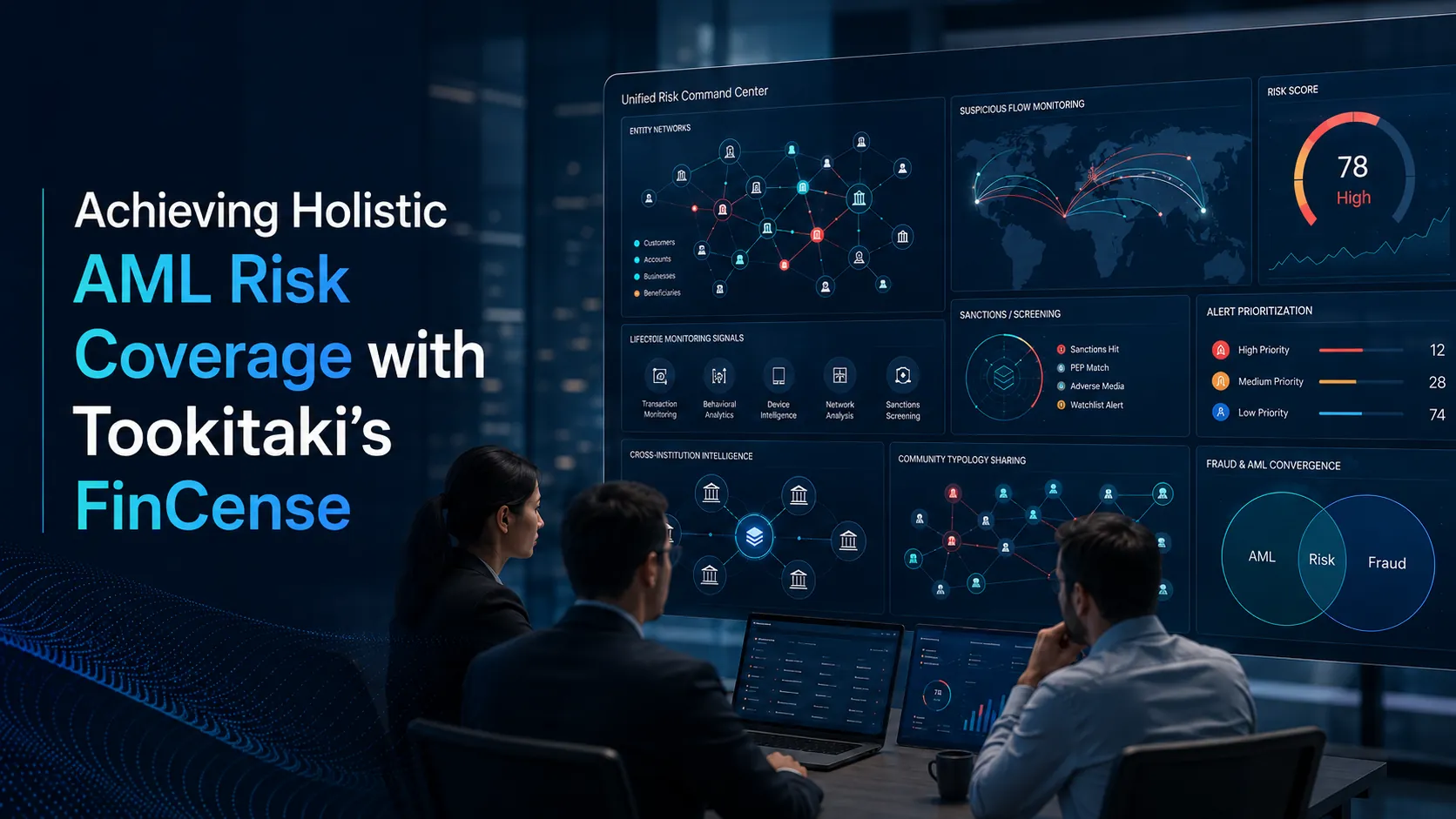
How Tookitaki’s FinCense Delivers End-to-End AML Compliance

Tookitaki’s FinCense platform is purpose-built to solve compliance pain points faced by financial institutions across Singapore and the broader APAC region.

Key Benefits:

  • Out-of-the-box scenarios from the AFC Ecosystem that adapt to new risk patterns
  • Federated learning to improve model accuracy across institutions without compromising data privacy
  • Smart Disposition Engine for automated case narration, regulatory reporting, and audit readiness
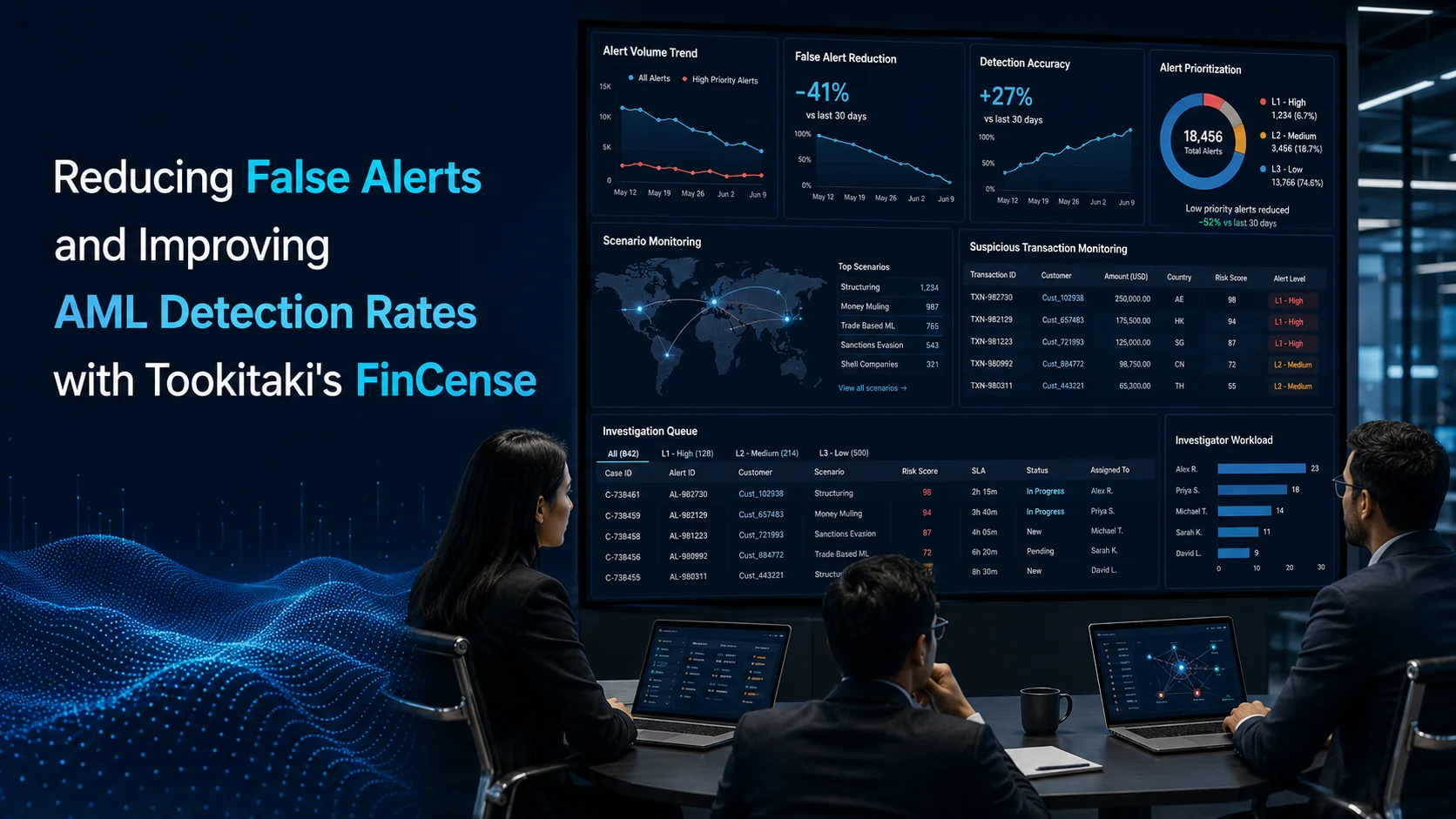
  • Real-time monitoring with adaptive risk scoring and alert prioritisation

With FinCense, institutions have reported:

  • 72% reduction in false positives
  • 3.5x increase in analyst efficiency
  • Greater regulator confidence due to better audit trails

FinCense isn’t just software—it’s a trust layer for modern financial crime prevention.

Best Practices for Evaluating AML Compliance Software

Before investing, financial institutions should ask:

  1. Does the software scale with your future growth and risk exposure?
  2. Can it localise to Singapore’s regulatory and typology landscape?
  3. Is the AI explainable, and is the platform auditable?
  4. Can it ingest external intelligence and industry scenarios?
  5. How quickly can you update detection rules based on new threats?

Singapore’s Regulatory Expectations

The Monetary Authority of Singapore (MAS) has emphasised risk-based, tech-enabled compliance in its guidance. Recent thematic reviews and enforcement actions have highlighted the importance of:

  • Timely Suspicious Transaction Reporting (STRs)
  • Strong detection of mule accounts and digital fraud patterns
  • Collaboration with industry peers to address cross-institution threats

AML software is no longer just about ticking boxes—it must show effectiveness, agility, and accountability.

Conclusion: Future-Ready Compliance Begins with the Right Tools

Singapore’s compliance landscape is becoming more complex, more real-time, and more collaborative. The right AML software helps financial institutions stay one step ahead—not just of regulators, but of financial criminals.

From screening to reporting, from risk scoring to AI-powered decisioning, AML compliance software solutions are no longer optional. They are mission-critical.

Choose wisely, and you don’t just meet compliance—you build competitive trust.

Singapore’s Financial Shield: Choosing the Right AML Compliance Software Solutions